Standards & Tests
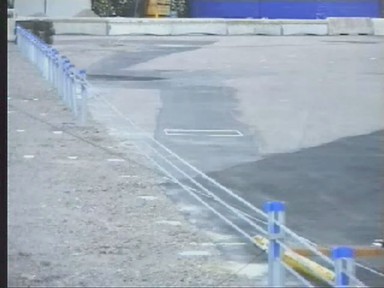
The wire rope barrier has a unique property: the barrier catches the car and allows it to “hang” in the wire ropes as if in a hammock, while the posts are bent when the car collides with them and are released from the wires. This produces low acceleration in the car, which is caught by the road barrier and is not thrown out into the carriageway again, which often happens when vehicles collide with traditional road barriers.
Various standards have been developed, and these are described below.
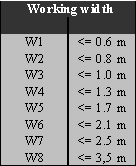
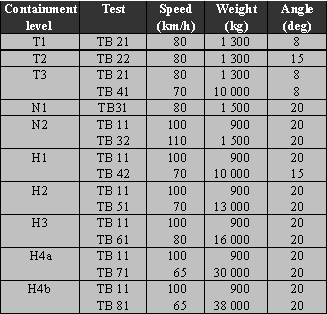
Standards have been developed within the European standardisation body, CEN (Commité Européen de Normalisation), for how impact tests are to be performed on road safety barriers. These road barrier impact tests are described in CEN 1317, Road Restraint Systems. The CEN standard imposes functional demands on the road road safety point of view. According to the CEN standards, the road barriers are to be impact-tested at different containment levels. The elongation of the road barrier is also measured, and this determines its working width. The road environment in which the barrier is to be constructed determines the appropriate containment level as well as the permissible working width. Furthermore, the CEN standard requires that the risk of injury in a collision with the barrier is minimised (injury risk class). This standard is used in the European countries and is common in countries near to Europe as well as in Australia and New Zealand, among others.
  |
 |
NCHRP stands for the National Cooperative Highway Research Program, a program developed by the Transportation Research Board of the National Research Council, USA. Report 350 is entitled “Recommended Procedures for the Safety Performance Evaluation of Highway Features”. The standard describes how impact tests are to be carried out and the result determines a working width expressed in metres. This standard is used mainly in the USA.
Tests performed in accordance with the standards above are carried out at various approved testing institutes, such as VTI (the National Highway and Transportation Research Institute, Linköping, Sweden), MIRA or TRL in England, Bast or TUV in Germany, ETH in Switzerland or TNO in Holland. SAFENCE wire rope barriers are available in different models and designs depending on the customer’s requirements regarding test standards, containment levels, working widths and injury risk class. Blue Systems have products tested for both EN 1317 and NHCRP 350.
Please video sequences of a number of our performed impact tests below:
Median & side barriers EN 1317-N2


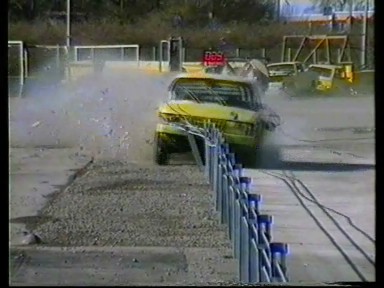
Median & side barriers EN 1317-H1


Median & side barriers EN 1317-H2
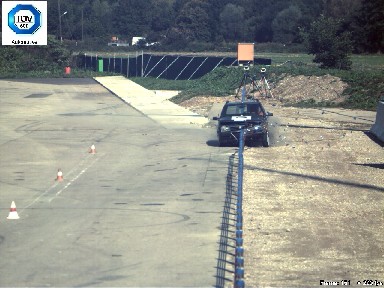
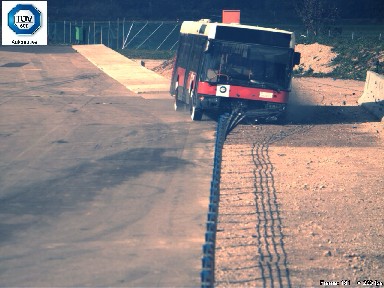
Slope barriers EN 1317-N2S
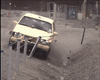
NCHRP 350 TL3
NCHRP 350 TL4




NCHRP 350 Terminal


NCHRP 350 4:1 slopes
Hit fence